Building Bridges through Interreligious Dialogue
- Eskisehir, Turkey 11-20 April 2023
About the Project
The Erasmus+ Youth Exchange "Building Bridges through Interreligious Dialogue" brought together young people from Germany, North Macedonia, Serbia, Croatia, Turkey, Poland, and Spain to explore religious diversity and intercultural dialogue as a means to fight religious discrimination.
The project approached the topic through three key aspects: the right to religion as a fundamental human right, the diversity of religions across participating countries, and the active participation of young people in combating religious discrimination. By creating a safe and open space for dialogue, the exchange encouraged participants to reflect on their own backgrounds and engage meaningfully with different perspectives.
In addition to fostering dialogue, the project promoted non-formal education as a powerful tool for youth development and intercultural learning. Through collaborative activities and international cooperation, participants were empowered to become advocates for more inclusive and open societies in their local communities and beyond.
The "Building Bridges through Interreligious Dialogue" project aimed to:
- Open the topic of interreligious dialogue and explore religious diversity across participating countries.
- Create a safe space to discuss the roots of religious discrimination and hate speech present in all participating societies.
- Create a safe space to discuss the roots of religious discrimination and hate speech present in all participating societies.
- Look for ways of building more open and inclusive communities that respect people from different religious backgrounds.
- Develop participants’ competencies in communication and teamwork through international non-formal education activities.
- Create an inspiring environment to support brainstorming and ideas for future projects in the international field.
- Produce a short film as a key project result to bring the topic of interreligious dialogue closer to young people in participating communities.
- Organise film screenings in participating countries to open the conversation on interreligious dialogue and present the Erasmus+ programme to a wider audience

Project Activities
The youth exchange was structured around several key activities:
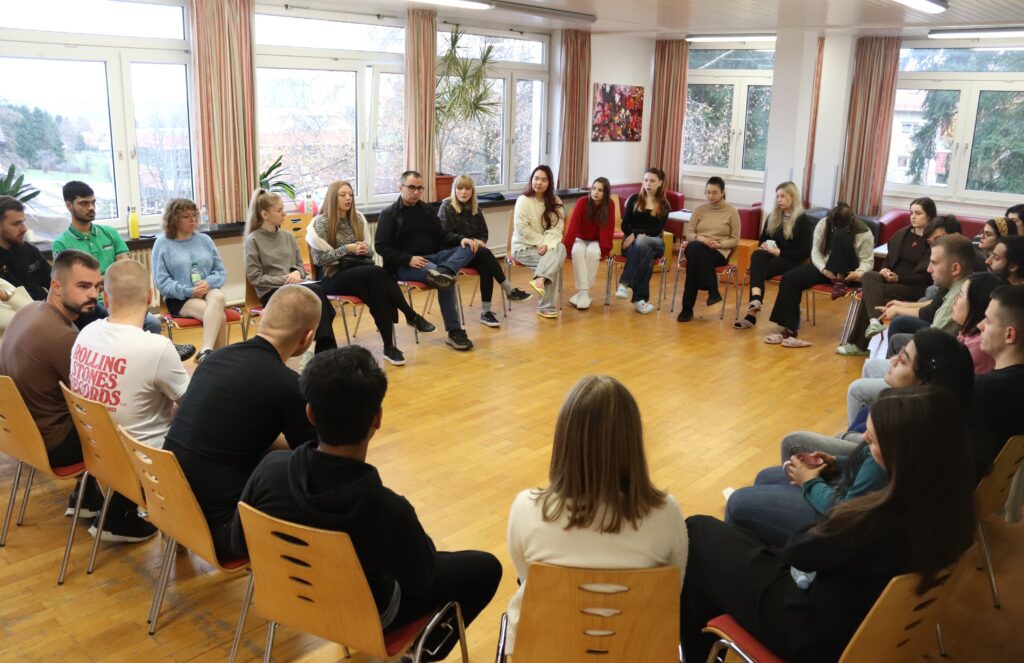
- Workshops on Religious Diversity — Participants explored the diversity of religious traditions represented across the seven participating countries, building mutual understanding and respect.
- Dialogue Sessions on Discrimination and Hate Speech — Through facilitated discussions, young people examined the roots of religious discrimination and hate speech and reflected on how these issues manifest in their own communities.
- Non-Formal Education Methods — Interactive and creative learning approaches were used throughout the exchange to encourage active participation and personal reflection.
- Short Film Production — As the key tangible result of the project, participants collaborated to create a short movie aimed at raising awareness about interreligious dialogue among young people.
- Intercultural Exchange — Bringing together youth from seven countries created a rich environment for sharing experiences, building friendships, and developing a broader European perspective.
Expected Results and Impact
Through the youth exchange, participants and their communities benefited in several important ways:
- Greater awareness and understanding of religious diversity and the right to freedom of religion as a human right.
- Improved ability to recognise and address religious discrimination and hate speech in everyday life.
- Strengthened competencies in communication, teamwork, and intercultural dialogue.
- A short film produced and shared as an educational resource to spark conversation on interreligious dialogue in participating communities.
- Film screenings organised in partner countries to engage wider audiences and promote the Erasmus+ programme.
- Inspired ideas and networks for future international youth projects focused on inclusion and dialogue.